In recent months, parts of the Croatian media landscape have published criticisms of certain cultural events organized by associations of the Serbian national minority. In these articles, such events are often described as politically motivated or provocative, shifting the focus of discussion from the circumstances of their organization to alleged broader cultural and political implications. In the following text, we examine the accuracy of the claims made in connection with one such event.
On 14 November of this year, as part of the Days of Serbian Culture, the Pula branch of the Serbian Cultural Society Prosvjeta organized the promotion of a new edition of the autobiography of the renowned modernist painter Vlaho Bukovac (1855–1922), entitled My Life. Several online portals (Narod.hr, Juginfo.hr, Teleskop) claimed that this was a “new attempt” to appropriate Croatian culture, placing the event within a broader narrative according to which Serbia is allegedly systematically attempting to appropriate the cultural heritage of Dubrovnik and Croatia.
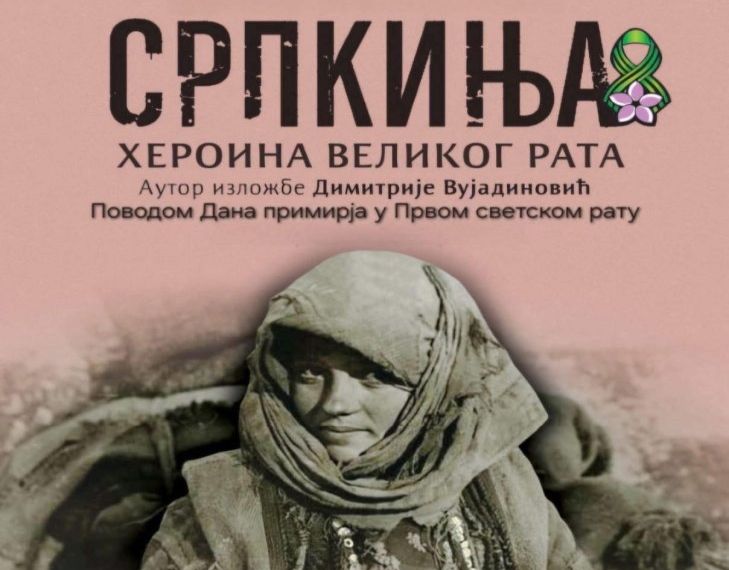
However, an analysis of the available facts does not support such claims. The act of organizing a book promotion of a Croatian artist by a Serbian minority organization should not in itself be seen as an act of cultural or political hegemony, and no such elements are evident in the specific case in Pula. In the invitation to the event, published by the organizer on social media (available here, archived here, event poster available here), Vlaho Bukovac’s ethnic background is not mentioned, nor is the author presented as belonging to Serbian culture. The same applies to the event itself, as reported by local and culture-oriented media whose journalists were present on site (see examples here, here, and here).
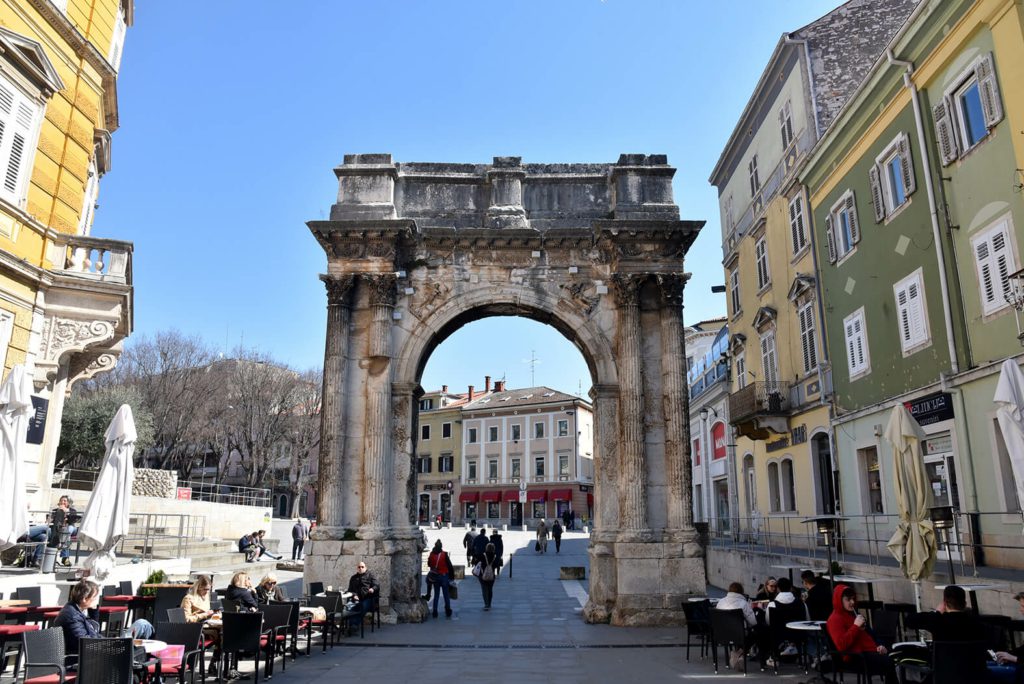
The promotion was held at the Pula City Library and Reading Room and was attended by public officials, including the Mayor of Pula, Peđa Grbin, the Head of the Department for Culture and Regional Identity of the Istrian County, Vladimir Torbica, and the Head of the Department for Culture of the City of Pula, Paola Orlić (available here, archived here). None of those present later raised objections regarding the content or character of the event.
Furthermore, as publishing is one of the core and longest-standing activities of the Serbian Cultural Society Prosvjeta, organizing book promotions is part of its regular work, carried out within the framework of the legally guaranteed rights of national minorities. My Life was published by the reputable Novi Sad publishing house Akademska knjiga, whose publications are also available in Croatian bookstores.[1] In this context, the participation of a Serbian publisher in a festival in Croatia does not represent an unusual or provocative practice.
2
Born in Croatia, with an Italian father and a Croatian mother, Vlaho Bukovac lived and worked in several European cultural environments during his life and career, including Croatia, Serbia, the Czech lands, and France. As a result, his work is often described in scholarly literature as being connected to multiple cultural and artistic contexts.[3]
In conclusion, an analysis of the aforementioned media articles shows that claims of “provocation” and “appropriation” of Vlaho Bukovac in Pula are directly contrary to publicly available and verifiable facts about the event itself. Based on the available sources, the claim that the promotion of Bukovac’s autobiography in Pula aimed to appropriate Croatian cultural heritage cannot be substantiated.
Such claims represent the dissemination of misinformation about the content and character of events organized by the Serbian national minority in Croatia. The publication of such inaccurate assertions contributes to the creation of distrust and further polarization in the public sphere, particularly when issues concerning national minorities are involved.
[1] Compare: https://www.superknjizara.hr/hr/akademska-knjiga-novi-sad-1; https://www.jesenski-turk.hr/en/akademska-knjiga-novi-sad-1; https://www.knjizara-dominovic.hr/proizvodi/izdavaci/akademska-knjiga/ (accessed 23 December 2025)
[2] https://www.mojnovisad.com/vesti/novosadska-akademska-knjiga-u-zagrebu-i-puli-id73469.html (accessed 23 December 2025)
[3] According to: Jukić, Tatjana. “Illyrianism and the Interpretation of Dreams: The Gundulićs of Vlaho Bukovac,” in Poznańskie Studia Slawistyczne 2 (Poznań, 2012): 189–211; and Petrinec, Sanja. “A World-Renowned Croatian Painter,” HEP Vjesnik 222/223 (July–August 2009): 48.
Funded by the European Union – NextGenerationEU.
Views and opinions expressed are however those of the author(s) only and do not necessarily reflect those of the European Union or the European Commission, nor the positions of the Agency for Electronic Media. Neither the European Union nor the European Commission, nor the Agency for Electronic Media can be held responsible for them.
This post is also available in: Hrvatski